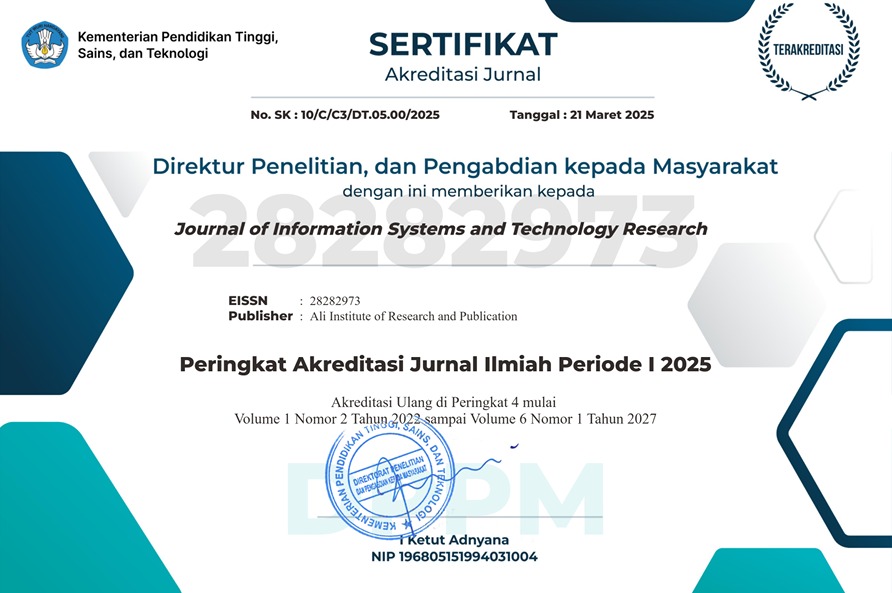
SINTA 4
NEW ACCREDITATION
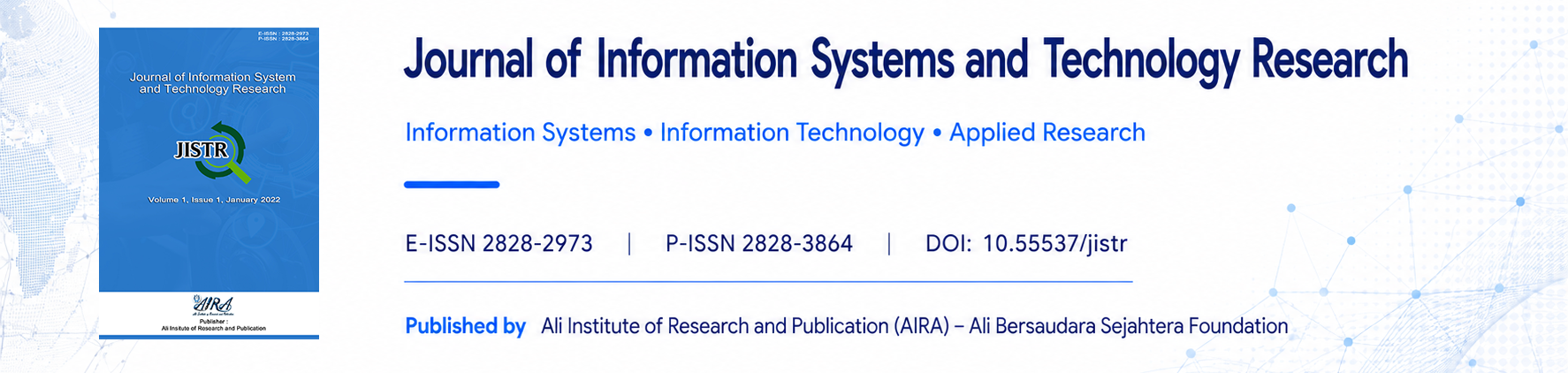
Journal of Information Systems and Technology Research (JISTR) recognizes the importance of electronic archiving and digital preservation in ensuring the accessibility, authenticity, integrity, reliability, and long-term availability of published scholarly research. The journal is committed to maintaining its scholarly publication records and supporting the continuity of access to published scientific content.
This policy establishes the journal's responsibilities and procedures concerning electronic archiving, data backup, digital preservation, system recovery, and the protection of electronic scholarly records. It supports transparency and responsible journal management in accordance with recognized scholarly publishing practices and applicable Indonesian scientific journal accreditation requirements.
JISTR maintains an electronic archive of its published issues and articles through the Open Journal Systems (OJS) publishing platform. The archive provides public access to published scholarly content and enables readers, researchers, and indexing services to retrieve article information and available full-text publication files.
Published articles are systematically organized by volume and issue, together with their bibliographic metadata, publication dates, author information, abstracts, keywords, persistent identifiers where available, and associated electronic files.
The electronic archive is maintained as part of the journal's official scholarly publication record. Published content must remain identifiable and accessible in accordance with the journal's Open Access Policy, Copyright and Licensing Policy, and Publication Ethics requirements.
Corrections, expressions of concern, retractions, and other post-publication notices must be appropriately identified and linked to the relevant publication records. The integrity of the scholarly record must be preserved without misleading alterations or undocumented removal of published content.
Official Journal Archives: JISTR Journal Archives.
Electronic backup is an essential component of the journal's information protection and operational continuity arrangements. Backup procedures are intended to reduce the risk of permanent data loss resulting from accidental deletion, software or hardware failure, data corruption, cybersecurity incidents, hosting disruptions, and other technical emergencies.
The publisher and authorized technical administrators are responsible for establishing, implementing, documenting, and maintaining appropriate backup procedures for the journal's OJS publishing environment.
The electronic backup framework covers the following components:
Backup activities must follow a documented operational schedule appropriate to the journal's publishing activities and technical infrastructure. The backup schedule must identify the frequency of backup operations, storage locations, retention arrangements, responsible personnel, and procedures for verifying backup integrity.
The journal's technical administrators are responsible for maintaining backup records and reviewing whether the established schedule remains adequate for the volume of journal data and the frequency of publishing activities.
Backup arrangements should include protected secondary copies stored separately from the primary publishing environment whenever technically feasible. Such separation reduces the risk of simultaneous loss of the operational system and its backup records.
Backup files containing unpublished manuscripts, personal information, confidential peer-review reports, or editorial correspondence must be protected through appropriate access controls and information security measures.
Backup operations must not compromise the confidentiality of editorial processes, the protection of personal data, or the integrity of the journal's publication records.
Digital preservation refers to the systematic protection and maintenance of published scholarly content to ensure its continued accessibility, authenticity, integrity, and usability over time.
JISTR is committed to supporting the long-term preservation of published articles, supplementary materials, and associated bibliographic metadata. Digital preservation is intended to protect the scholarly record from technological obsolescence, accidental loss, data corruption, unauthorized alteration, and disruptions affecting the journal's publishing infrastructure.
The journal's digital preservation objectives include:
The journal distinguishes operational data backup from long-term digital preservation. Backup procedures primarily support the restoration of journal systems and records following technical failures, while digital preservation focuses on maintaining the continuing accessibility and integrity of published scholarly content.
The publisher and editorial team should periodically evaluate the suitability of publication file formats, metadata structures, storage arrangements, and preservation procedures. Where necessary and technically feasible, file format migration or other preservation measures may be implemented to maintain continued access to published scholarly materials.
JISTR may adopt additional digital preservation arrangements through institutional repositories, trusted digital repositories, or recognized preservation services such as LOCKSS, CLOCKSS, or the PKP Preservation Network, subject to technical eligibility, formal implementation, and operational verification.
The journal shall publicly identify any external digital preservation service only after its participation has been confirmed and the preservation arrangement is operational. The journal will not claim preservation coverage through a third-party service without appropriate supporting evidence.
JISTR recognizes the importance of maintaining operational continuity and restoring access to scholarly records in the event of unexpected technical disruptions.
The publisher and authorized technical administrators are responsible for developing and maintaining appropriate recovery procedures for the journal's electronic publishing environment.
System recovery procedures should address the following priorities:
Technical administrators must periodically review the integrity and usability of backup copies and conduct restoration tests at appropriate intervals to determine whether essential electronic records can be successfully recovered.
Recovery activities should be documented internally, including significant incidents, restoration actions, identified problems, and corrective measures undertaken to prevent similar disruptions.
If a technical disruption temporarily affects public access to published articles, the editorial team and technical administrators should coordinate appropriate recovery actions and provide relevant service information to readers when necessary.
All recovery and maintenance activities must comply with applicable confidentiality, data protection, copyright, and information security requirements.
Effective electronic archiving and digital preservation require clearly defined responsibilities among the publisher, technical administrators, and editorial team.
The responsibilities are assigned as follows:
The publisher, Editor-in-Chief, and authorized technical administrators should periodically review the journal's electronic archiving, backup, recovery, and digital preservation arrangements to ensure their continued suitability.
Significant changes to the journal's digital preservation arrangements should be documented and, where relevant to public access or preservation coverage, communicated transparently through the journal's official website.
This Electronic Archiving and Digital Preservation Policy should be read in conjunction with other JISTR policies addressing public access, copyright, publication ethics, research integrity, and editorial responsibilities.
Additional information is available through the following official journal pages:
Questions or concerns regarding electronic archiving, access to published content, or digital preservation may be directed to the journal's editorial office through the official contact information provided on the journal website.


|
Address
Jl. Pukat Banting IV No.41, Bantan,
Medan Tembung District, Medan City, North Sumatra 20223 |
Contact
Journal of Information Systems and Technology Research
✉ journal.jistr@gmail.com
☎ +6281263151592
|
Publisher
Ali Institute of Research and Publication (AIRA)
– Ali Bersaudara Sejahtera Foundation
|
License
 Creative Commons
CC BY-SA 4.0 |